
How we chose these tires
Tires are one of the most consequential choices you can make for a pickup or body-on-frame SUV. They affect towing stability, fuel economy, off-road capability, payload capacity, and comfort, all at once.
Our picks are editorial choices based on each tire's category, its published manufacturer specs (treadwear warranty, UTQG grades, load range and the severe-snow symbol) and what it is designed to do. We don't road-test tires and we don't use review scores. The picks cover the three categories most pickup owners choose between: all-season highway, all-terrain and mud-terrain.
Truck treads run from quiet highway ribs to open mud lugs.
Highway
Ribs, narrow grooves
All-terrain
Interlocking blocks, more void
Mud-terrain
Big lugs, wide voids
From highway to all-terrain to mud-terrain: quieter and longer-wearing on pavement at one end, more grip in dirt and mud at the other.
How to choose a truck tire
Do you tow or haul heavy loads regularly?
Do you drive off-road more than 20% of the time?
Do you live in a region with heavy winter snow?
Is fuel economy a priority?
| Driver profile | Best tire type | Our pick |
|---|---|---|
| Daily driver, light towing | All-season highway | Michelin Defender LTX M/S |
| Weekend off-roader | All-terrain | BFGoodrich KO2 |
| Snow belt driver | All-terrain (3PMSF) | Falken Wildpeak AT3W |
| Serious off-road / overlanding | Mud-terrain | Goodyear Wrangler MT/R |
| High-mileage highway commuter | All-season touring | Continental TerrainContact H/T |
Best all-season highway truck tire
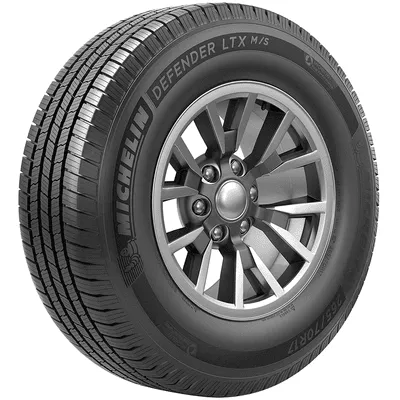
Michelin Defender LTX M/S
Our default pick for trucks that spend nearly all their time on pavement. It is a highway all-season tire with a long treadwear warranty and an A traction grade, which suits commuting, road trips and light towing. Expect to pay more up front than for most alternatives.
- Treadwear warranty
- Up to 70,000 mi
- UTQG treadwear
- 720–800
- UTQG traction
- A
- Severe snow (3PMSF)
- No
Strengths
- Long treadwear warranty for a truck tire
- Highway tread designed for quiet, comfortable pavement driving
- UTQG traction grade A
Tradeoffs
- Usually costs more up front than the alternatives
- Not for serious off-road use
Manufacturer specs across the 28 sizes we list. Yours may differ.
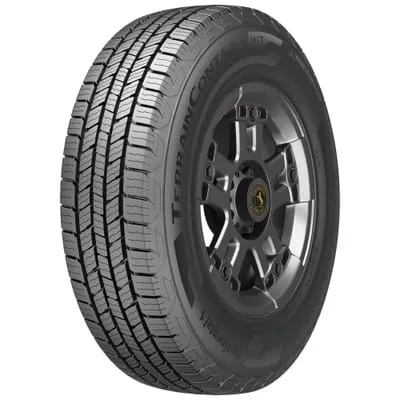
Continental TerrainContact H/T
A close alternative to the Defender LTX M/S on paper: the same 70,000-mile warranty ceiling and an A traction grade, usually at a lower price. If the Michelin is over budget, start here.
- Treadwear warranty
- Up to 70,000 mi
- UTQG treadwear
- 720–800
- UTQG traction
- A
- Severe snow (3PMSF)
- No
Strengths
- UTQG traction grade A
- Highway tread designed for low road noise
- Usually priced below the Defender LTX M/S
Tradeoffs
- Treadwear warranty drops to 60,000 miles on some sizes
Manufacturer specs across the 29 sizes we list. Yours may differ.
Best all-terrain truck tire

BFGoodrich All-Terrain T/A KO2
One of the longest-running all-terrain designs on the market, built for gravel, dirt and rocky trails with reinforced sidewalls. Expect more road noise than a highway tire; that is the trade for off-pavement grip.
- Treadwear warranty
- 50,000 mi
- UTQG treadwear
- 500–750
- UTQG traction
- A
- Severe snow (3PMSF)
- Most sizes
Strengths
- Long-running all-terrain design for gravel, dirt and rocky trails
- Reinforced sidewalls for rocky terrain
- Severe-snow (3PMSF) symbol on most sizes
Tradeoffs
- More road noise than highway-focused tires
- Shorter treadwear warranty than the Wildpeak AT3W
Manufacturer specs across the 41 sizes we list. Yours may differ.
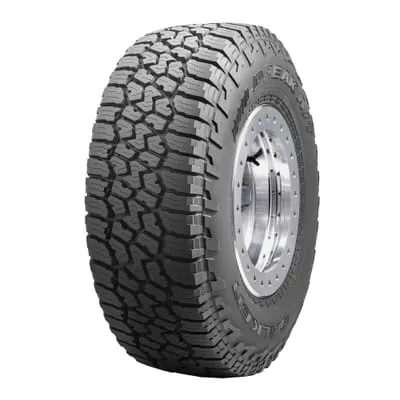
Falken Wildpeak AT3W
Our value pick for all-terrain use. It carries a 55,000-mile treadwear warranty and the severe-snow (3PMSF) symbol on most sizes, which suits snow-belt truck owners who want one tire year-round. It does not replace a dedicated winter tire on ice.
- Treadwear warranty
- 55,000 mi
- UTQG treadwear
- 600–660
- UTQG traction
- B
- Severe snow (3PMSF)
- Most sizes
Strengths
- Longer treadwear warranty than the KO2 (55,000 vs 50,000 miles)
- Severe-snow (3PMSF) symbol on most sizes
- Usually priced below the KO2
Tradeoffs
- UTQG traction grade B, where the KO2 is graded A
- Not a substitute for a dedicated winter tire on ice
Manufacturer specs across the 7 sizes we list. Yours may differ.
Best mud-terrain truck tire

Goodyear Wrangler MT/R with Kevlar
A purpose-built mud-terrain tire with Kevlar-reinforced sidewalls for serious off-road use. Accept the highway noise and fuel-economy trade: this is an off-road tool first.
Strengths
- Kevlar-reinforced sidewalls to resist cuts and punctures
- Open, self-cleaning tread designed for deep mud
Tradeoffs
- Loud on highway
- Significant fuel economy penalty
- Not comfortable for daily driving
Not in our tire catalog yet, so we can’t show its specs.
LT vs P-metric tires for trucks
LT (light truck) tires
- Heavier reinforced construction, 6 or more plies
- Higher load ratings (C, D, E load range)
- Required for towing near GVWR rating
- Stiffer sidewall = harsher ride but more stable under load
- Usually cost more than P-metric equivalents
- Recommended: towing, hauling, off-road, full-size trucks
P-metric tires
- Lighter construction, 4-ply standard
- More comfortable ride on paved roads
- Lower load ratings than LT equivalents
- Better fuel economy due to lower rolling resistance
- Fine for light-duty use: commuting, light hauling
- Recommended: daily drivers, lifestyle trucks, light SUVs
The rule of thumb
If your truck came with LT tires from the factory, replace with LT tires. If it came with P-metric tires, P-metric replacements are fine unless you've started towing or hauling loads beyond the vehicle's original design intent.